
A sneaker drop has unexpectedly turned into a viral trademark fight between 7-Eleven and Nike and a strong reminder for companies that trademark risk extends far beyond names and logos. The trademark dispute highlights an important point for brand owners: trademark clearance should evaluate not only names and logos, but also product designs and other visual elements that may function as brand identifiers.
Earlier this month, Nike began promoting an Air Max 95 colorway (see below) scheduled for release on July 11 (“7/11”) featuring orange, green, and red stripes that many sneaker publications and social media users immediately associated with 7‑Eleven’s well-known branding. Nike did not describe the shoe as an official collaboration with 7‑Eleven, but the color scheme, references to a “corner store” in promotional materials and the planned July 11 launch date led many observers to view the design as an homage to the convenience-store chain—an association that ultimately became central to 7‑Eleven’s trademark claims.
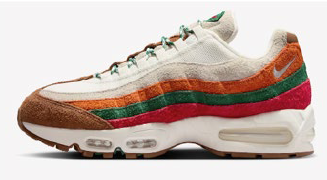
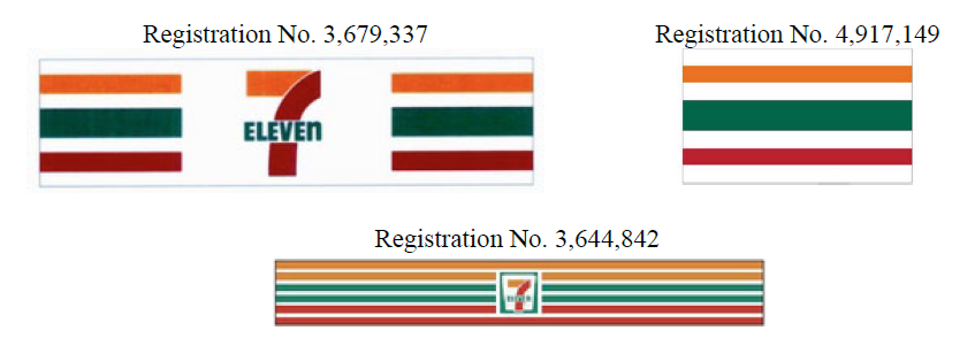
After learning of the anticipated drop, 7-Eleven immediately filed suit in the Northern District of Texas, alleging that Nike’s planned Air Max 95 sneaker unlawfully copies 7-Eleven’s recognizable stripe trade dress asserting claims including federal trademark infringement, unfair competition and dilution. 7‑Eleven cites a family of trademark registrations (shown below) in support of its infringement claims, including registrations covering its distinctive orange, green and red “Tri‑Color” branding that it alleges consumers associate with the 7‑Eleven brand.
7‑Eleven points to its history of collaborations with brands such as Crocs, Sunday Golf, Breezy Golf and DGK as evidence that consumers are accustomed to seeing co‑branded 7‑Eleven products. It argues that this history increases the likelihood that consumers would mistakenly believe Nike’s sneaker was an authorized 7‑Eleven collaboration, even though it was not.
Not only does 7-Eleven say the shoe is a direct copy of its distinctive color scheme and trade dress, but 7-Eleven says the very date of the release shows an intent to copy 7-Eleven’s intellectual property. Specifically, Nike’s choice of July 11, which is also 7-Eleven’s annual “7-Eleven Day” (when the chain offers free slurpees to customers) demonstrates an intent to trade off of their goodwill for the release of this sneaker.
The lawsuit has attracted significant attention in both the sneaker and trademark communities. Much of the online discussion has focused on the combination of the shoe’s orange, green and red color scheme and its planned July 11 release date, with many commentators noting that the design had already been widely referred to as the “7‑Eleven” Air Max before the complaint was filed.
For companies launching consumer products, the dispute highlights the importance of considering potential risks in product launches beyond a traditional clearance search of trademarks or logos. It also serves as a reminder that products can create trademark risk without expressly referencing another brand, particularly when their design, timing or marketplace presence suggests an affiliation or collaboration.
The bigger lesson is that a brand is more than just its name or logo. Colors, stripes, product design, marketing and even the timing of a product launch can shape how consumers perceive a product. In today’s collaboration-driven marketplace, a look or color scheme alone can be enough to spark claims that consumers are being led to believe two brands are connected.
Dinsmore will continue to monitor this litigation and its potential implications for trademark owners and is available to help clients assess and protect valuable brand assets in an increasingly crowded marketplace.