
Celebrating New Chapters:
Catch up with Christian Gonzalez
In June 2025, Christian Gonzalez, chair of Dinsmore’s Corporate Group, was named Executive Vice President and Chief Legal Officer of Fifth Third Bank. He succeeds fellow Dinsmore alumna and former Corporate Chair Susan Zaunbrecher, who retired after six years in the role.
Fifth Third wrote in its press release announcing the executive leadership changes, “Gonzalez brings extensive experience across corporate, banking, and securities law, as well as mergers and acquisitions, venture capital, capital markets, regulatory compliance and corporate governance. He joins Fifth Third after 15 years at Dinsmore & Shohl LLP.”

How’s the new gig?
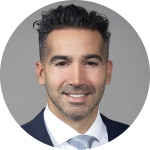
It’s been a sprint from day one—and I wouldn’t have it any other way. My career has been a steady diet of high-pressure situations, and the training I received at Dinsmore taught me how to stay calm, focus and solve problems when everything seems to be coming at once. I’m comfortable walking into a “room on fire,” finding the oxygen and getting to the right outcome.
What’s surprised me most is how quickly the pace accelerates when you’re at the executive table. Decisions are made in real time, often not with the opportunity of complete information, and the stakes are higher—not just for the company, but for our customers and communities. I’ve learned that resilience isn’t just about surviving the fire; it’s about thriving in it, adapting quickly and helping others do the same. The ability to remain composed and decisive under pressure is a skill I rely on daily.
How is it different?
At Dinsmore, my role as a practicing attorney was to assess risk and recommend structures. I provided a view of where clients sat along the risk spectrum—every deal has risk—without inserting my own business judgment. Now, as one of eight executives at a Fortune 300 company, I’m expected to deliver both legal counsel and business decisions across multiple functions. The responsibility—and accountability—are different.
The biggest shift is that I’m now a stakeholder in the outcome, not just an advisor. My recommendations have direct business impact, and I’m expected to weigh legal risk against strategic opportunity. It’s a balancing act—sometimes the best legal answer isn’t the best business answer, and vice versa. I’ve had to develop a broader perspective, learning to speak the language of finance, operations and technology, and to collaborate with leaders across the organization.
What excited you about the Fifth Third role?
It’s a new challenge with real growth. Financial services is a historic, highly regulated industry—but this company is innovating in product, expansion and areas like stablecoin and embedded payments. I’m stepping into a new space, and the bank is, too. That’s exciting. The nuance is that regulation isn’t keeping pace with product innovation, so part of my job is helping teams get comfortable living in the gray—recognizing that clarity is rare, risk is constant and judgment is what carries the day.
What really drew me in was the chance to help play a role in shaping the future growth of the bank. We’re not just reacting to change—we’re driving it. I get to work with talented people who are passionate about building new solutions for our customers, and I’m challenged to think creatively about how to navigate regulatory uncertainty. It’s a dynamic environment where legal and business strategy are deeply intertwined.
Any advice for your former colleagues or those considering an in-house position?
Become the indispensable, trusted advisor—and always show up. Relationships, new or longstanding, are never “on autopilot.” Clients can feel when they’re not getting your A team. Make people feel seen and supported, even when six other calls are waiting. I’ve already watched firms gain or lose share based on this alone; there’s always someone knocking.
In house, the value you bring is measured by your ability to anticipate needs, solve problems proactively and communicate clearly. It’s not enough to be technically excellent—you have to be present, responsive and genuinely invested in your clients’ success. The best lawyers I’ve worked with are those who make themselves indispensable by being reliable, thoughtful and always willing to go the extra mile.
What does Dinsmore’s thriving alumni network say about the training at the Firm?
Leaving was one of my toughest decisions. I love the Firm. It made me the attorney I am—through hands-on training and early, practical experience. Our lawyers learned to enter “burning rooms” and breathe without catching fire. The alumni track record of in-house leadership speaks for itself and reflects the Firm’s training ground and incubation model. Peer to peer dialogue and knowledge sharing are natural extensions of the way we practiced together.
The alumni network is a testament to the Firm’s commitment to developing well-rounded lawyers. I see former colleagues thriving in diverse roles—leading legal teams, driving strategy and making an impact in their organizations. The culture of mentorship and collaboration at Dinsmore doesn’t end when you leave; it continues through alumni connections, shared experiences and ongoing support.
How do you like living in Cincinnati?
Relocating with young kids (six and eight) has its moments, but they’re resilient and happy. We’re still house hunting in a tight market, so we are living a bit like gypsies bouncing from one Airbnb to the next. When new people arrive in your city, open doors and connect them. It’s hard to be successful if you feel like an outsider; alumni can make that difference.
I have always felt from my many past visits that Cincinnati has a vibrant legal and business community. I’ve been impressed by how welcoming people are. Building new relationships—both professionally and personally—has been key to settling in. I encourage everyone to reach out, make introductions and help newcomers find their footing. It’s amazing how a simple gesture can make someone feel at home and accelerate their impact.