
The United States Patent and Trademark Office (USPTO) has increased flexibility in how ornamental designs for computer-generated interfaces or icons, e.g., GUI designs, are presented in design patent applications. The change now allows projected, holographical and virtual or augmented reality designs.
In new guidance Examination of Design Patent Applications Related to Computer-Generated Interfaces and Icons, 2026-04987 (91 FR 12394) issued March 13, 2026, the USPTO lifted the requirement that the drawing(s) for GUI and icon designs depict, in either solid or broken line, the article of manufacture, e.g., a computer or portion thereof. “The depiction of a display screen or a portion thereof is no longer required when both the title and claim properly identify the article of manufacture, e.g., a computer, a computer system, or a computer display panel.”[1] As long as the article of manufacture is properly identified in both the title and the claim, even if it is not shown in the drawings, the claim will be considered compliant with the article of manufacture requirement.
35 U.S.C § 171 states that a patent may be obtained for “any new, original and ornamental design for an article of manufacture.” The article of manufacture has long been interpreted to mean a design must be applied to or embodied in an article of manufacture,[2] not be merely a transient,[3] disembodied picture or three-dimensional image.[4] Previously, an application needed to depict a display screen, computer, mobile device, tablet or other display device, in solid or broken line.[5] The two-dimensional (2D) interfaces and icon on a display screen were treated as surface ornamentation applied to the article of manufacture, the display screen. The USPTO has reversed this requirement, which also paves the way for projected or holographic interfaces or icons, e.g., those separate from the computer or device.[6]
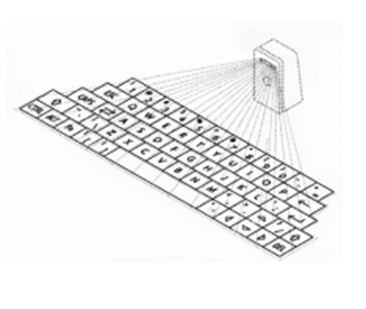
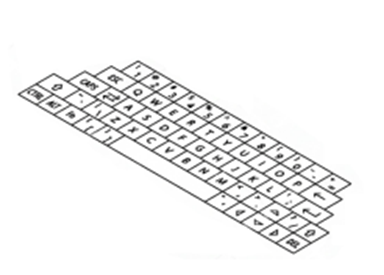
Projected or holographic interfaces or icons, including virtual or augmented reality designs (PHVAR), are those which may exist separately from, or not necessarily be displayed on, a computer or display screen which generates it. The USPTO finds that such interfaces or icons may be protected when (a) the appearance of the interface or icon is separate from the computer, computer display or computer system that generates the interface or icon; and (b) the interface or icon is for a computer, computer display or computer system such that the interface or icon is more than a transient or disembodied picture or three-dimensional image.
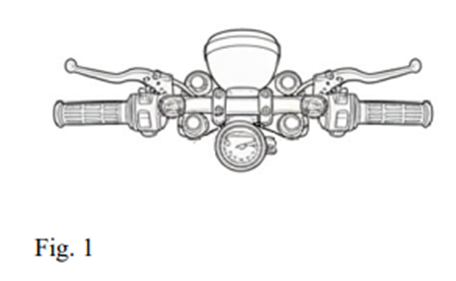
Several examples were provided by the USPTO in the new guidance.
Claim and title language
The claim and title should still indicate the article of manufacture with a preposition, e.g., “for computer” or “computer with.” Other examples include:
- Icon for display panel
- Projected interface for computer
- Interface for computer system
- Display panel with computer icon
- Computer screen with an icon
- Display panel with GUI
- Display screen or portion thereof with icon
- Portion of a computer screen with an icon
- Portion of a display panel with an icon
- Portion of a monitor displayed with an icon
- Icon for display screen
- GUI for display panel
- Projected interface for a computer
- Virtual Reality interface for a computer
- Augmented reality interface for a computer
- Computer icon
Drawings
Drawings do not need to contain a depiction of the article of manufacture.


If you have questions about these developments, or design patents generally, contact the author of this article or your Dinsmore intellectual property attorney.
[1] Guidance: Examination of Design Patent Applications Related to Computer-Generated Interfaces and Icons, issued March 13, 2026, 2026-04987 (91 FR 12394) p. 6-7.
[2] See Samsung Elects. Co. v. Apple Inc., 580 U.S. 53, 60 (2016) (“‘Article of manufacture’ has a broad meaning. An ‘article’ is just ‘a particular thing’ . . . [a]nd ‘manufacture’ means ‘the conversion of raw materials by the hand, or by machinery, into articles suitable for the use of man’ and ‘the articles so made’. . . [a]n article of manufacture, then, is simply a thing made by hand or machine.”).
[3] In re Schnell, 46 F.2d 203, 209 (CCPA 1931) (“[T]he design must be shown not to be the mere invention of a picture, irrespective of its manner of use…”).
[4] See Ex parte Strijland, 26 USPQ 2d 1259, 1263 (Bd. Pat. App. & Int. 1992) (holding that computer-generated icons are patent eligible and afforded protection under 35 U.S.C. 171 so long as the specification demonstrates, including specifically through drawings, the design applied to an article as required by 35 U.S.C. 171 and by 37 CFR 1.152.); Schnell, 46 F.2d at 209.
[5] MPEP §1504.01(a), the MPEP incorporated previous guidance, 2023 Supplemental Guidance, on computer-generated electronic images, which required drawings to depict, in either solid or broken line, a computer, mobile device, or other display screen or portion thereof, upon which the design was displayed. See Supplemental Guidance for Examination of Design Patent Applications Related to Computer-Generated Electronic Images, Including Computer-Generated Icons and Graphical User Interfaces, 88 FR 80277 (November 17, 2023) and its corrected notice, 89 FR 5506 (January 29, 2024) (collectively, 2023 Supplemental Guidance).
[6] MPEP § 1504.01(a)(I)(A). “We do not see that the dependence of the existence of a design on something outside itself is a reason for holding it is not a design ‘for an article of manufacture.’” See also In re Hruby, 373 F.2d 997, 1001, 153 USPQ 61, 66 (CCPA 1967) (design of water fountain held to be patent eligible under 35 U.S.C. 171 as a design for an article of manufacture).